I am designing an integrative primary care and preventive medicine practice that is integrated into a regenerative, organic, working farm.
I am working to redefine what healthcare can be, and am building a practice rooted in a deep connection to community, to food, and to land.
"Healthcare is an agricultural act - farming is an act of healthcare."
An integrative model that uses sustainable, regenerative farming to produce nutrient-dense food, serving as an important tool to build health, and to prevent and treat chronic diseases. This model connects agricultural and soil health directly with human health, and is centered around the interconnection of individual, community and ecological wellbeing.
The office location for your primary and integrative medicine care will be based on the farm property. Your doctor is a working farmer. Your farmer is a working doctor.
A hybrid of Direct Primary Care (DPC) and Community Supported Agriculture (CSA). As a patient, you will have regular access to the nutritious food the farm offers, included as part of your care. In addition, this farm-practice will be a model for Agriculture-Supported Community (ASC).
Care and treatment are woven into the farm directly, when clinically appropriate and desired by the patient, integrating elements of the farm into your care plan. For example, if someone presents with insomnia, in addition to all the standard allopathic (pharmaceutical and diagnostic workup), integrative (lifestyle, deficiency, behavioral and mind-body approaches), your farm-based medical care may include incorporation of herbal medicine directly from the herb garden, or a CSA share specifically designed to increase your magnesium intake. All tailored to your specific needs and preferences. All under the expert care of your physician.
Ideally suited to chronic health conditions and “pre-conditions” for which allopathic medicine, and even integrative medicine, fall short, including: metabolic dysfunction and related conditions, chronic stress related disease, chronic inflammation.
immense phytonutrient source - helpful especially for the conditions above
The farm itself serves as a therapeutic landscape, offering a healing environment beyond the clinic walls. No chaotic parking lots, no maze of elevators, hallways and waiting rooms.
Unlike commodity-agriculture farms, this farm and what it produces will be responsive and custom-tailored to the needs and desires of my patients and to the community. This mirrors the ethos of my medical practice, personalization and responsiveness.
The farm exists as an offered complement to standard clinical care. As with any other therapeutic tool or modality, my patients are entirely in control of how much or how little they engage with and utilize it.
The farm-clinic emphasizes the fact that human health is a downstream extension of soil health. For example, the human gut and the living soil are essentially parallel ecosystems that communicate directly through the food we eat. Understanding this interconnection bridges the gap between regenerative agriculture and preventive medicine, revealing how biological resilience in humans is fundamentally rooted in the ground.
By embedding integrative primary care within the physical and conceptual context of a farm, this model establishes an approach to health and clinical care that directly begins to address the interconnected factors that influence a person's overall health and well-being, and treats patients as complete, complex humans rather than just collection of symptoms or a specific disease.
The farm is not just a source of phytonutrient-dense food; it is an ecosystem that fosters connection (to nature, to other people, and to oneself) as well as environmental and community strength and resilience. It is also a place for regular intentional movement, fresh air and natural light, and stress reduction.
The act of farming informs a lot about how to transform our personal health and our idea of healthcare (collective health) in general. Farm-based communities offer radical new paradigms for healing, connection, and resilience.
Retaining all the benefits of modern science and medicine, but returning to the community-based, farm-based, garden-based, and nature-based medicine that is in many ways the root of our current medical system.
Farm-based healthcare embodies the interdependent triad of environmental justice, addressing health disparities and the failings of our healthcare system, and the importance of access to healthy, local food.
My journey in medicine has always been inextricably linked to my experience of farming and growing food. Having worked on over a dozen farms, I have seen countless ways in which farms have drastically improved the health and lives of the people who engage with them. In fact, it was my work as a farmer that inspired me to become a physician, a step that might initially sound like a big pivot, but was actually very instinctual and congruent.
Even during the intense demands of medical school and residency, I couldn't stay away from farming, and helped out at local farms on rare days off. Working with soil and cultivating food has always been an act of nurturing my health and the health of my community, and those values will remain consistent when I have my own farm.
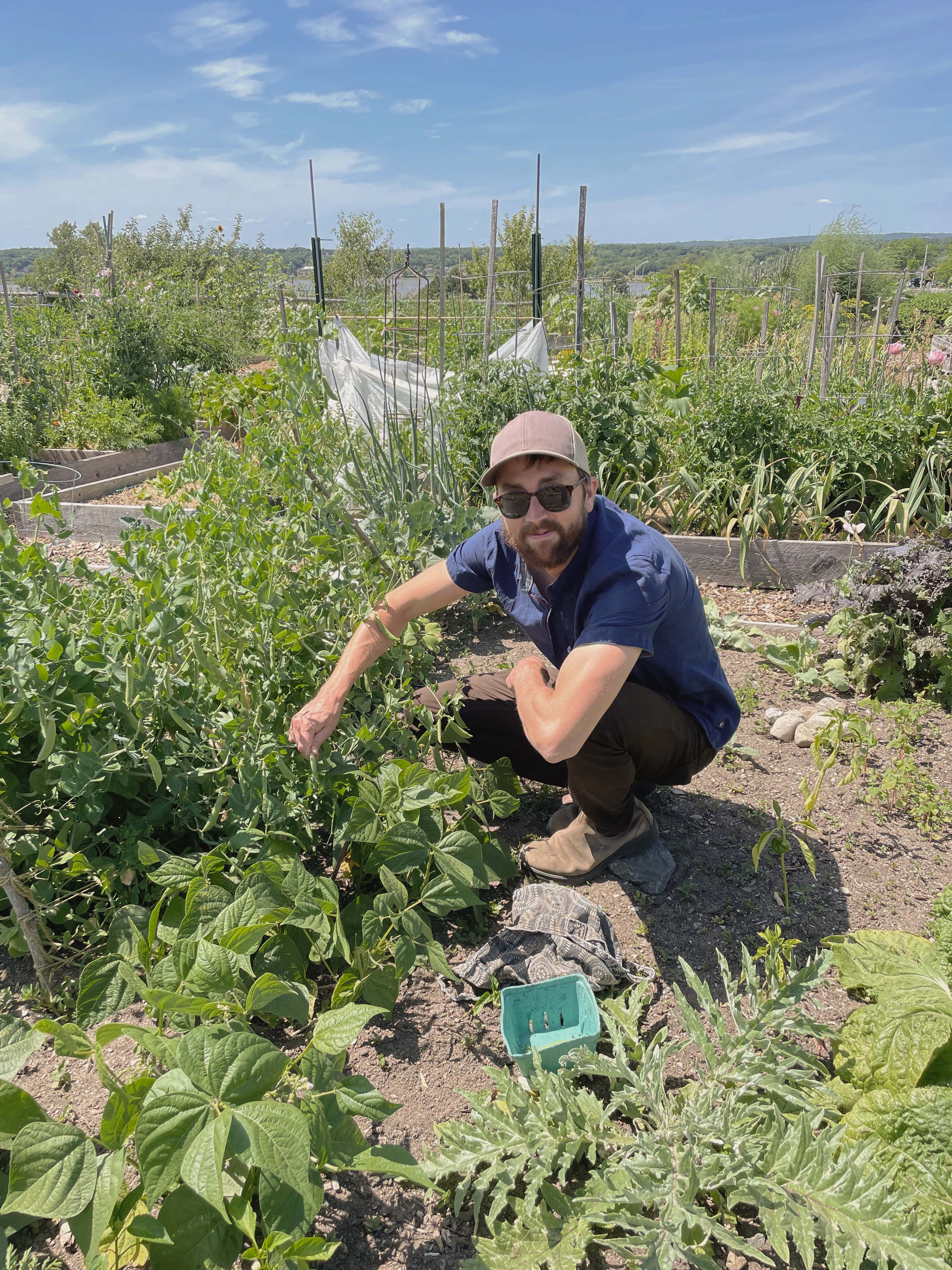
Farming has also played a pivotal role in my own health journey. I discovered firsthand that farming, connecting with the land, utilizing food-based medicine and being open to a wide range of approaches and perspective on health and healing can not only treat and heal chronic illness, but actually build health and from the ground up. It is this lived experience that inspires my approach to patient care every day.
Ultimately, being a farmer has made me a better doctor, and being a doctor has made me a better farmer.
There are many parallels between farming and healthcare.
Here are just a few.
Soil has a vast and complex microbiome, often containing more microorganisms in a single teaspoon than there are people on Earth. Cultivating and nourishing the microbiome of the soil is essential for a healthy farm, healthy, and our personal health.
The human microbiome is essential to our survival, playing critical roles in digestion, nutrient absorption, immune system regulation, metabolic health, nervous system regulation, and defense against pathogens. This complex ecosystem profoundly influences both our physical health and mental well-being.
Farming is ultimately an act of stewardship. It involves mindful attention, tending to the land and the plants, daily care, patience, incremental improvements (and sometimes setbacks), committment and work, all in the context of long-term future goals. This is part of what makes farming so rewarding.
I see myself and my patients as co-stewards in the mindful, attentive, incremental process of addressing illness, identifying risks and creating long-term health, functional capacity, and vitality.
Root-cause analysis is the shift from symptom and disease management on the farm, to systemic healing. Root-cause analysis means treating the farm as an interconnected biological organism and asking why a vulnerability exists in the first place. This strengthens the longterm resilience of the farm ecosystem, and directly translates to higher nutrient density, effectively turning the root-cause approach into preventive medicine.
When done well, healthcare investigates and seeks to resolve the underlying root causes of symptoms and chronic ilness, rather than just suppressing symptoms or waiting for them to become more obvious or severe.
Cultivation in farming is the deliberate management of land to provide the optimal conditions for the farm to thrive.
Cultivation is the proactive, daily process of nurturing the body's foundational biological environments—such as the gut microbiome and metabolic pathways—to foster long-term physiological resilience, rather than merely waiting to suppress isolated symptoms as they arise.
Farming is an art and a science, combining the application of biological and ecological principles, with the intuitive, adaptive art of observing and responding to the nuanced rhythms of a living landscape.
The practice of medicine is also an art and a science, combining the rigorous clinical application of physiology and pathology, with the empathetic, intuitive art of navigating a patient's unique lived experience.
Crop variety and rotation, and cultivating a diverse farm ecosystem creates long-term resilience, adaptability, and higher quality nutrition.
Human health (individual and community) also thrives when diversity (in all forms) is embraced.
The soil and farm as an ecosystem requires the right balance of nutrients, pH and other factors. The farm system has its own form of metabolism, and the soil can have deficiencies, excesses and imbalances. Annual soil tests are routinely performed to assess the health of the soil.
The human body is also in a delicate, highly regulated state of multi-system balance and equilibrium, often assessed by labs and other diagnostic tests. Restoring and maintaining this balance is a foundational concept in the care I provide.
The farm naturally follows and adapts to many rhythms and cycles, including temperature cycles, precipitation cycles, daylight (circadian) cycles, ecological succession, nutrient cycles, and seasonal cycles of slowing down and rest. The farm is not static, it is always in a state of change.
We also exist within many natural internal rhythms and cycles, including hormonal, metabolic, neurologic, digestive, immune, reproductive and epigenetic systems, many of which are impacted by our nutrition, our daily activity, our lifestyle, our mental and emotional states, our interactions with our environment, and the natural cycles around us. We are also in a state of constant change.
Building healthy soil and a health farm takes years of proactive care.
Building your personal health also involves proactively nurturing the body's foundational systems, ultimately cultivating resilience and adaptability to stressors.
Farming involves keen observation and listening to the entire farm organism and ecosystem, built on a strong relationship the land, in order to recognize patterns and understand the needs of the farm and the plants.
Truly listening and keen observation is absolutely central to the the way I practice medicine. A “slow medicine” approach based on continuity and a strong doctor-patient relationship allows me the time and ability to recognize patterns and understand the needs and desires of my patients.
Regenerative farming focuses on the nutrient density and quality of the soil, farm ecosystem and food, rather than sheer volume and profit.
Good medicine recognizes that food is more than fuel,
The goal of regenerative farming is not only to predict, identify and holistically manage problems and conditions as they arise, but more fundamentally to cultivate a farm ecosystem robust enough to withstand things like disease, pests, and extreme weather such as drought.
The goal of healthcare, specifically integrateive primary care, is is not only to predict, identify and holistically manage problems and conditions as they arise, but more fundamentally to cultivate ato build an adaptable human system that can gracefully handle life's inevitable physical and emotional stressors.
The farm can be seen as a living organism, a complex web of interactions between soil, water, sunlight, air, microbes, plants, people, animals, insects, and the physical environment.
Human health is also a complex web of interdependent relationships between what we eat and drink, the air we breathe, our microbiome, our metabolic pathways, our genetics and ancestry, our communities, our interactions, our home environment, our sleep and other rhythms, our mental and emotional wellbeing, and more.
Farming has the potential to actually achieve a net positive effect on the environment, on the social fabric of our communities, and our individual health.
Healthcare, when done well, also has the potential to achieve a positive effect on not just our health and vitality, but on the health of our environment and the social fabric of our communities.
Interested in collaborating on this initiative?
Let's ConnectThis site does not provide medical advice. The content of this website is provided for informational or educational purposes only. It is not intended to be a substitute for informed medical advice or care. You should not use this information to diagnose or treat any health issue without consulting your doctor.
© 2026 Brian Wasser, MD.